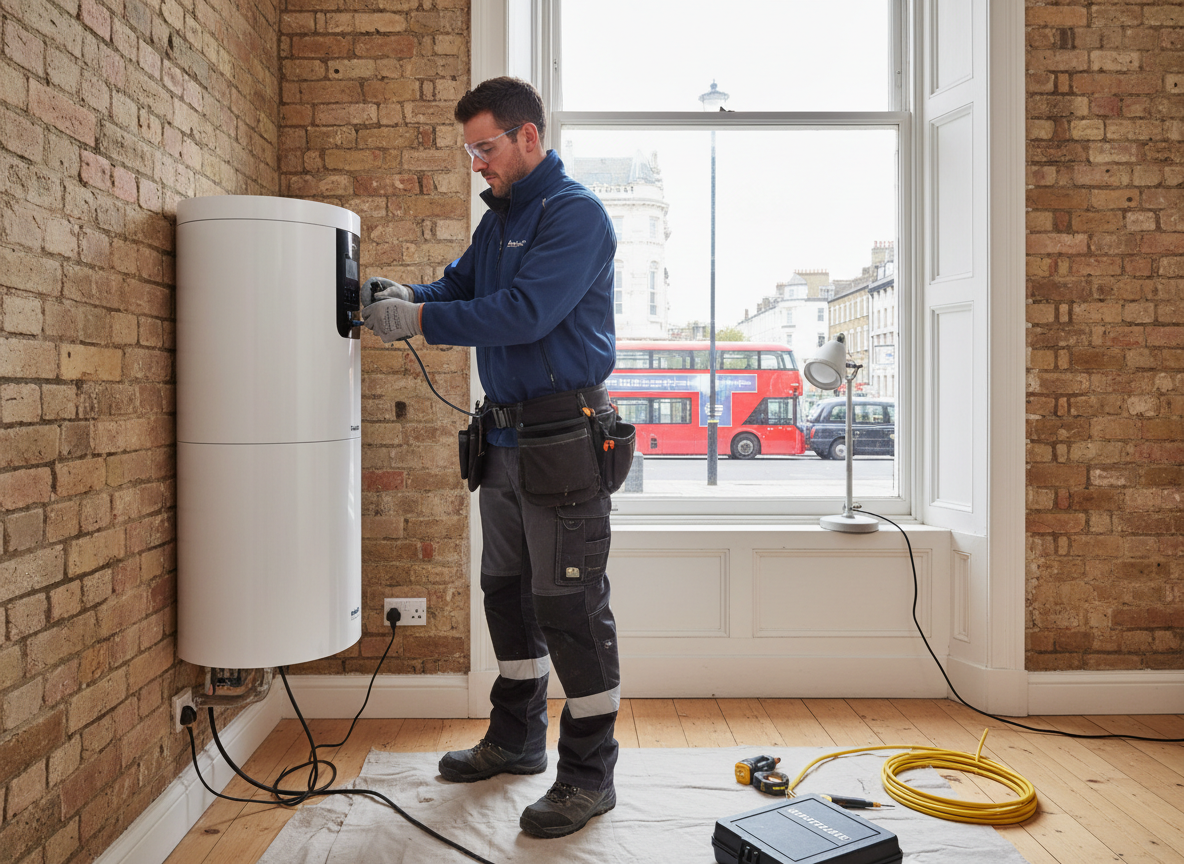
London's older housing stock, particularly the Victorian terraces and Edwardian conversions common around Islington and Camden, often features solid brick walls and limited cavity insulation that lose heat quickly once the heating cycle ends. High heat retention systems address this by storing energy during off-peak periods and releasing it steadily, reducing the impact of the city's damp winters and sudden cold snaps that arrive from the Thames corridor. Installers must account for the age of wiring in these buildings, as pre-1960s circuits frequently require upgrades before new units can be safely connected.
Edge cases arise in converted flats where party walls and shared lofts create uneven heat distribution; a single high retention unit placed incorrectly can leave bedrooms cold while overheating living spaces. Regulations require adherence to Part L of the Building Regulations and careful positioning to avoid overloading consumer units common in multi-occupancy properties. Soil conditions around North London, with its clay-heavy ground, also affect external cable runs, demanding proper depth and protection to prevent future faults from ground movement.
Homeowners sometimes attempt DIY swaps of older storage heaters without checking the existing economy-7 tariff compatibility, leading to higher running costs than expected. Proper sizing depends on room volume and insulation levels rather than simply matching existing unit footprints, especially in the tall-ceilinged rooms found throughout N7 and nearby postcodes.
Technician insight
In London, the thing that catches most people out with High Heat Retention installer is the state of the consumer unit in pre-war terraces around Islington and N7. Clay soil movement shifts external cables over time, and many homeowners assume the old wiring can handle the load without an upgrade.
High Retention Upgrade in Islington Terrace
A homeowner in a 1890s Islington terrace reported cold bedrooms despite running storage heaters all night. We found the original wiring could not support modern high retention units and that party-wall heat loss was the real issue. We upgraded the circuit, installed correctly sized units on the ground and first floors, and programmed them to the economy tariff. The house now maintains steady temperatures through the night with lower overall usage.
How it works
- 1
Site Survey
Assess property age, existing electrics, and heat loss patterns in the specific London building.
- 2
System Design
Select and size high retention units to match room volumes and off-peak tariff availability.
- 3
Installation
Upgrade circuits where needed, mount units, and integrate controls while protecting cable runs from local ground conditions.
- 4
Commissioning
Test output, set timers to local tariff periods, and explain daily operation to the homeowner.
Pricing
Quotes provided after on-site survey; final cost depends on number of units, wiring condition, and access constraints typical in London terraces.