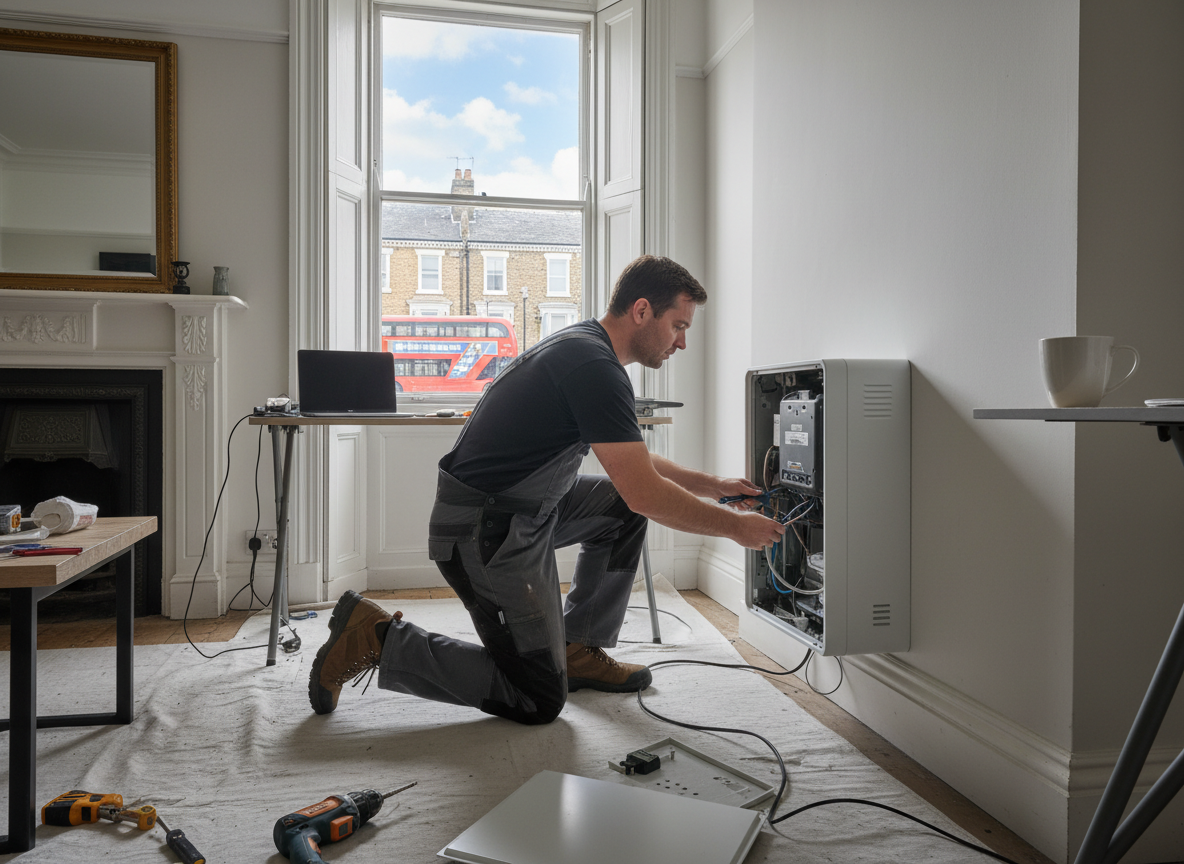
Storage heaters work best when sized to the property's heat loss and the existing electrical supply. In London homes built before 1950, many still rely on single-phase supplies that struggle with multiple high-capacity units. We calculate the required kWh storage per room using fabric U-values rather than rule-of-thumb sizing, then check whether the consumer unit and incoming cable can handle the load without triggering an upgrade. This step prevents nuisance trips during the overnight charge period on Economy 7 or similar tariffs.
Positioning matters in solid-wall terraces common across Islington and Hackney. Heaters must sit clear of curtains and furniture while allowing air circulation; we often fit low-level models in rooms with high sills or boxed-in pipework. In converted flats above shops or in basements, we also check for damp that can corrode the metal casing and reduce element life. Proper ventilation behind the unit and use of the correct fixings into brick or block prevents movement that leads to loose connections over time.
Modern fan-assisted storage heaters offer better control than older brick-core models still found in many Greater London properties. We programme the input and output thermostats to match the household's occupancy pattern rather than leaving factory settings. This reduces wasted heat during the day when residents are out and ensures rooms reach temperature by early evening. We always leave the client with the exact settings recorded and explain how to adjust them seasonally.
After installation we test the full overnight charge cycle and measure surface temperatures to confirm even heat distribution. In multi-storey buildings we also verify that the landlord's electrical certificate covers the new circuit. Any shortfall is flagged before we leave so the client can arrange remedial work without delay.
Technician insight
In London the thing that catches most people out with storage heater installation is the single-phase supply in pre-1960 terraces around N7 and N19. Adding two or three new units can overload the incoming cable even when the consumer unit looks modern, so we always measure the voltage drop during a simulated charge before finalising the layout.
Holloway Conversion Flat
The client reported two old storage heaters failing to warm the living room overnight. On inspection we found the original 1960s wiring had been extended with inadequate cable for the new load. We replaced the heaters with fan-assisted models on a new dedicated circuit from the consumer unit and set the charge times to match the household's schedule. The flat now reaches comfortable temperature by 6 pm without daytime top-up.
How it works
- 1
Site Assessment
We inspect the existing heaters, electrical supply, insulation levels and room layouts in the London property to determine the correct heater sizes and any supply upgrades needed.
- 2
Tariff and Controls Check
We confirm the meter type and Economy 7 or equivalent tariff, then advise on input/output settings that match the home's daily routine.
- 3
Installation
Old units are removed, new storage heaters are mounted on suitable fixings, wired to a dedicated circuit and commissioned with the correct charge periods.
- 4
Handover and Testing
We run a full charge cycle, demonstrate the controls and leave written settings plus contact details for any follow-up questions.
Pricing
Upfront quote provided after site visit; final cost depends on number of units, any supply upgrades and access conditions in the property.